Feral Pest Species
Deer — Sambar, Red & Fallow
Deer are among the most destructive feral animals in Victoria. Three species — Sambar, Red and Fallow — cause extensive damage to crops, pastures, orchards, fences and waterways across the state.
Victoria's Most Damaging Feral Pest
Deer were introduced to Australia in the 19th century for sport and have since spread across Victoria in enormous numbers. With no natural predators and a high reproductive rate, populations have exploded — and the damage to farming properties, native bush and water catchments has grown with them.
Sambar deer are the largest and most widespread, found across the ranges and increasingly pushing into farmland. Red deer occupy open grassland and forest edges, while Fallow deer are common across western and central Victoria. All three species cause significant agricultural and environmental damage.
Unlike many pest species, deer are large, mobile and capable of covering vast distances overnight. A mob of deer can strip a paddock, destroy a vineyard row or break through a fence line in a single night — and be kilometres away by dawn.
The Three Deer Species in Victoria
Sambar Deer
Cervus unicolor
The largest deer species in Victoria, Sambar can weigh up to 250 kg and stand 1.4 m at the shoulder. They are primarily nocturnal, solitary and highly elusive — making them difficult to locate and control. Sambar are found across the Great Dividing Range and are increasingly common on farmland adjoining state forest.
Red Deer
Cervus elaphus
Red deer are a medium to large species, with stags weighing up to 180 kg. They prefer open grassland and forest edges and are more gregarious than Sambar, often moving in mobs. Red deer are found across parts of eastern and central Victoria and cause significant damage to improved pastures and crops.
Fallow Deer
Dama dama
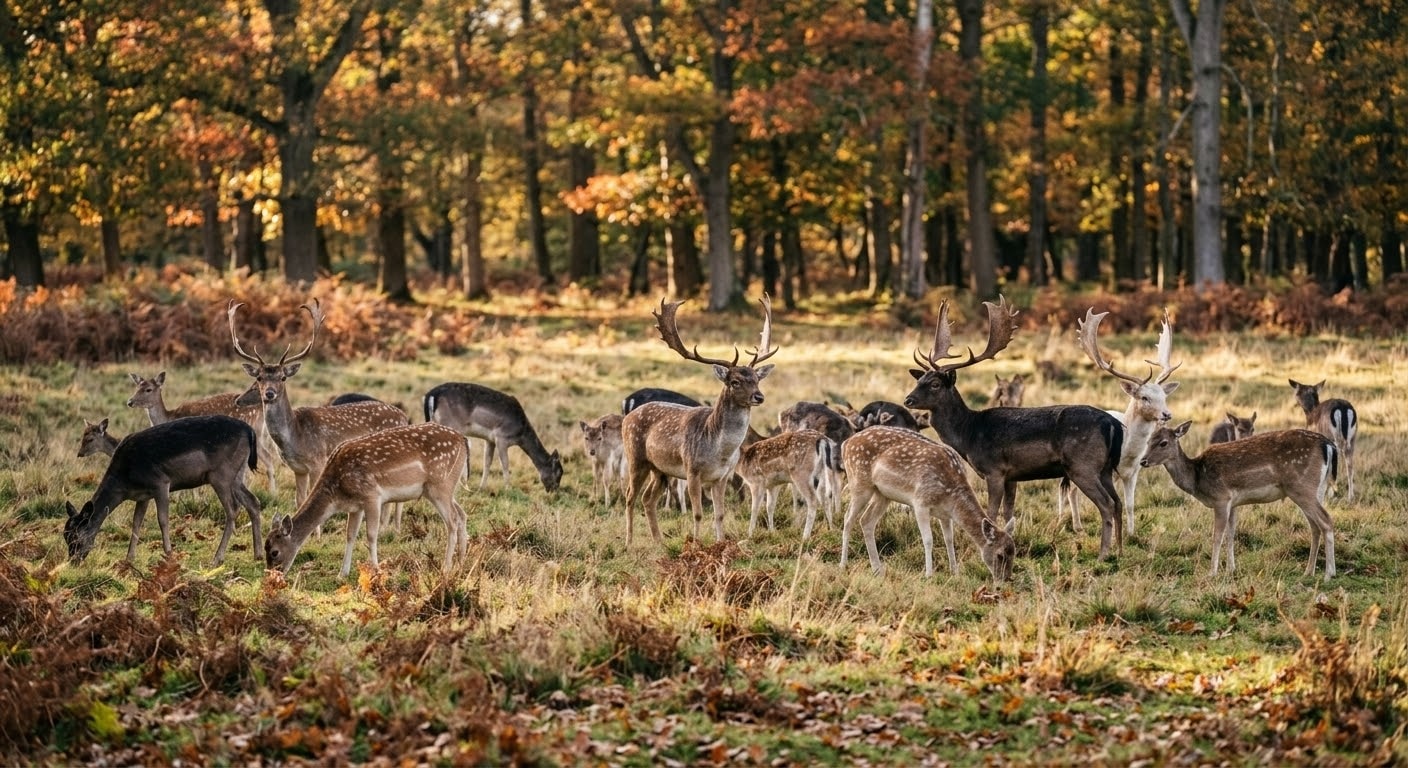
Fallow deer are a smaller, highly adaptable species found across western and central Victoria. They are gregarious and can form large mobs, causing concentrated grazing pressure on pastures and crops. Fallow deer are particularly damaging to orchards and vineyards due to their browsing behaviour.
How to Identify Deer on Your Property
Deer are often active at night and rarely seen directly. These are the signs to look for on your property.
Tracks & Footprints
Deer leave distinctive cloven hoof prints — two pointed toes forming a heart shape. Sambar prints are large (8–10 cm), Red deer medium (6–8 cm) and Fallow smaller (5–7 cm). Look for tracks in soft soil around dams, creek banks and muddy gateways.
Fraying & Antler Rubs
Stags rub their antlers against tree trunks and fence posts, stripping bark and leaving raw, shredded wood. Fraying marks are typically 0.5–1.5 m above ground. Fresh rubs will have moist, pale wood; older rubs darken and dry out.
Browsing & Grazing Damage
Deer browse at heights up to 1.5 m, leaving a clean, torn edge on vegetation (unlike rabbits which cut cleanly). Look for stripped lower branches, eaten pasture with hoof prints nearby, and damaged crop rows with large tracks in the soil.
Wallows
Sambar deer in particular create wallows — shallow depressions in wet or boggy ground where they roll to cool down and coat themselves in mud. Wallows are often found near creeks or dams and will have a strong musky odour and large hoof prints surrounding them.
Droppings
Deer droppings are oval pellets, typically 1–2 cm long, dark brown to black and often found in clusters. Sambar droppings are larger than Fallow or Red deer. Fresh droppings are moist and shiny; older ones dry and crumble.
Fence Damage
Deer push through or jump fences, leaving bent or broken wire, snapped star pickets and disturbed soil at crossing points. Sambar in particular will force through fences rather than jump, leaving characteristic low-level wire damage and tufts of coarse brown hair caught on barbs.
How Deer Damage Your Property
Crop & Pasture Destruction
Deer graze heavily on improved pastures, cereal crops, vegetables and fodder crops. A mob of Sambar can consume or trample an entire paddock in a single night, causing losses that can run to thousands of dollars per event. Repeated grazing prevents pasture recovery and forces farmers to resow at significant cost.
Orchard & Vineyard Damage
Deer cause severe damage to orchards and vineyards by browsing on young shoots, stripping bark from trunks and rubbing antlers against trees and posts. Antler rubbing — known as 'fraying' — can ringbark and kill mature fruit trees and vines. A single stag can destroy dozens of trees in one night during the rut.
Fence Damage & Livestock Escape
Deer push through, jump over and break down fencing — including high-tensile and barbed wire — creating gaps that allow livestock to escape. Repairing deer-damaged fencing is a constant and costly burden for affected landholders, with some properties spending tens of thousands of dollars annually on fence maintenance.
Waterway & Dam Fouling
Deer congregate around dams, creeks and waterways, causing bank erosion through heavy trampling and fouling water with urine and faeces. This degrades water quality for livestock and can spread disease. Riparian vegetation is also heavily browsed, destabilising banks and increasing sediment loads in waterways.
Native Vegetation Loss
Deer browse heavily on native understorey plants, preventing regeneration of native species and fundamentally altering the structure of bush and forest. In high-density areas, the understorey can be completely stripped, leaving bare ground that is vulnerable to weed invasion and erosion.
Vehicle Collision Risk
Deer on roads and farm tracks are a serious safety hazard. Vehicle collisions with Sambar deer — which can weigh over 200 kg — cause significant vehicle damage and can be fatal. Collisions are most common at dawn and dusk when deer are most active.
How Paul Controls Deer
PJD Feral Animal Management uses a combination of professional methods to reduce deer numbers and protect your property.
Thermal & Night Vision Operations
Most deer control is conducted after dark using thermal imaging and night vision equipment. This allows Paul to locate deer that are otherwise invisible, assess mob size and composition, and take precise, humane shots with minimal disturbance to the property.
Stalking & Spot-and-Stalk
For properties with dense cover, Paul uses professional stalking techniques to locate and approach deer on foot. This method is particularly effective for Sambar deer in thick bush and ranges.
Property Survey & Mapping
Before any control operation, Paul surveys the property to identify deer movement corridors, bedding areas, feeding zones and fence crossing points. This intelligence drives targeted, efficient operations.
Ongoing Management Plans
For properties with persistent deer pressure, Paul develops ongoing management plans with scheduled operations throughout the year. Regular control prevents populations from rebuilding and keeps damage at manageable levels.
Victorian Regulations & Field Guide
Key legal, identification and field-handling information for the three deer species managed in Victoria.
Sambar Deer
Cervus unicolor
Red Deer
Cervus elaphus
Fallow Deer
Dama dama
Deer Damaging Your Property?
Contact Paul to discuss your property's deer pressure and arrange a professional control operation.
See also: Deer Harvesting & Removal · All Feral Pest Species